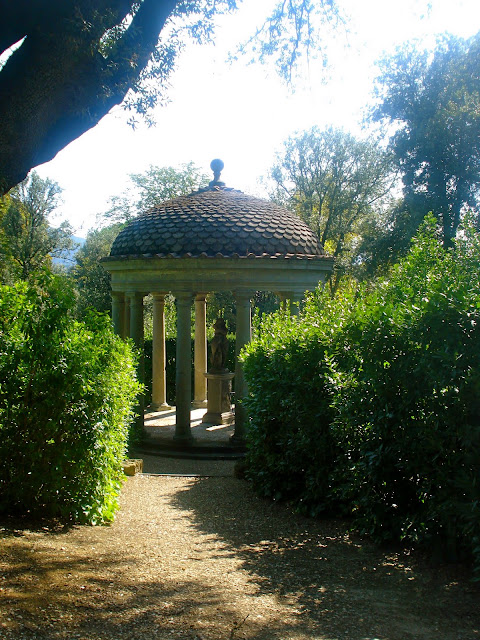
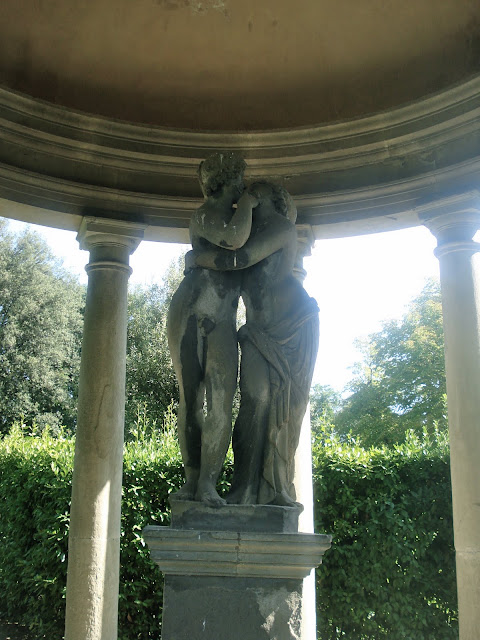
Yesterday, I pitched in at the Olive Harvest at Villa La Pietra. Picking the olives off one at a time from the branches is part of a traditional fall activity which the Italians call la raccolta. The raccolta begins the first week of November. It is important not to pick olives before they ripe. A bitter olive oil usually means that the producer jumped the gun and started early. We picked the olives and tossed them into bushels where they would be sent to a local olive oil producer to be crushed. After olive picking for a few hours, we were given an olive oil tasting. In front of us were set three small cups of olive oil - a very yellow color; a darker golden color; and a green-gold olive oil. As you may have guessed, we all liked the darker one the most. The smell and taste were the most potent, rich, complex and a bit peppery. What I learned about olive oil is that darker most generally means better, but not necessarily so. It could just mean that the oil is younger. Smell is very important when choosing an olive oil. The stronger the smell, the more virgin it probably is. Sediments on the bottom are also good sign and are safe for eating. In Puglia, the region where most Italian olive oil is produced and where my Nonna is from, they only use the olives. However, in Tuscany, some producers also use the leaves when crushing the oil, giving the oil a more bitter peppery taste. Our olive oil lector, a British transplant who is obsessed with Tuscan gastronomy and agriculture, said that ''only a true Italian can taste the difference.''
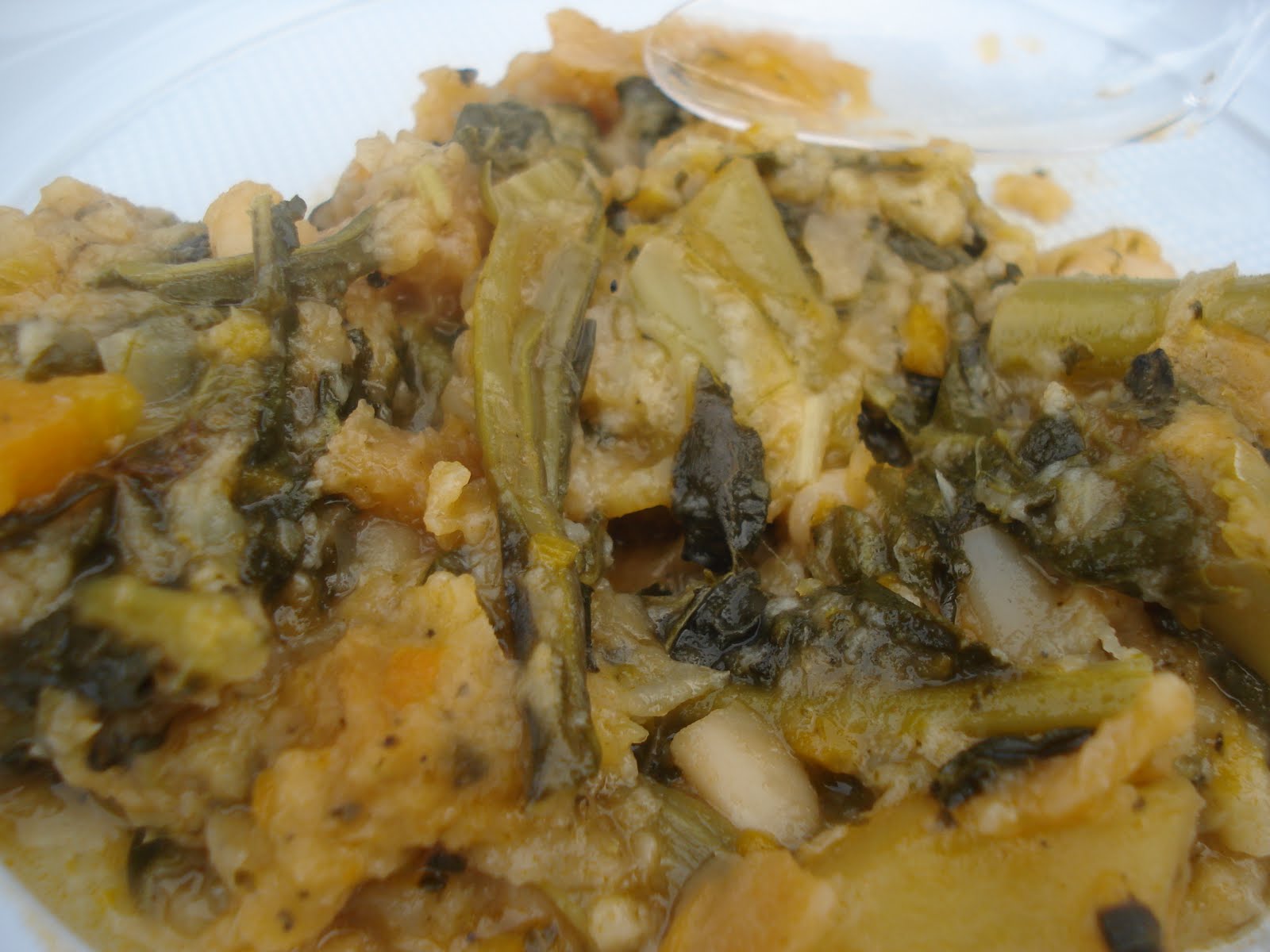
For lunch, we were served Ribollita Soup, a traditional Tuscan dish served as a main course. The men were grilling sausages which were served with Tuscan bread with olio nuovo, a cloudy green-gold olive oil bottle to go around. The Ribollita Soup was one of the most delicious soups I have ever tasted and I am hoping I (or..if you're reading this..mom) can recreate it when I am back home. Ribollita means reboiled. Traditionally, ribollita is a bread-thickened vegetable soup.
*This recipe comes from a restaurant in Florence, the Giannino.
INGREDIENTS
1 cup cannellini beans, uncooked
1 large red onion, sliced
2 carrots, diced
1 celery stalk, diced
4 potatoes, diced
10 zucchini, diced
1 1/2 cups swiss chard, shredded
1 leek
1 savoy cabbage, shredded
1 bunch kale, shredded
salt and pepper
2-3 tablespoons tomato paste
2 days old stale Tuscan white bread
Soak the beans overnight and then cook over low heat. It will take approximately 1 to 1 1/2 hours for them to cook. In a pan, gently fry the onion. Add the other vegetables, with the exception of the cabbage, kale and beans which are added at a later point.